Studio Operations Suite
A 14-workflow n8n system for a tattoo and barber studio. I started it in February 2026 as a portfolio demo. In March a studio owner agreed to pilot it, and from then on I built it around how his studio actually runs. Nine workflows have been in regular use there since June.

- 45–60 → 10–15 min for weekly payouts, by the owner’s estimate
- 9 of 14 workflows in regular use since June 2026
- 1–2 hrs of admin saved a week, also his estimate
- 5 workflows dropped by the owner, with reasons
The problem
The studio
A tattoo studio carries compliance work most shops don’t: sharps disposal logs, autoclave spore tests, and artist permits that lapse on their own schedules.
Pay doesn’t fit one formula either. Each artist is on commission, but with their own rate and base. A single Irezumi piece can take months of sessions, and the same customer questions about hours, aftercare and pricing come in again and again.
Neil’s studio has a fixed location but opens only Thursday to Sunday, alongside his full-time job, with friends sometimes setting up a chair when it’s open.
How it works
Forms and payments in, Slack out
01Comes in
- Jotform forms, filled in by staff
- The week’s Square payments
- Daily and weekly schedules
02n8n checks
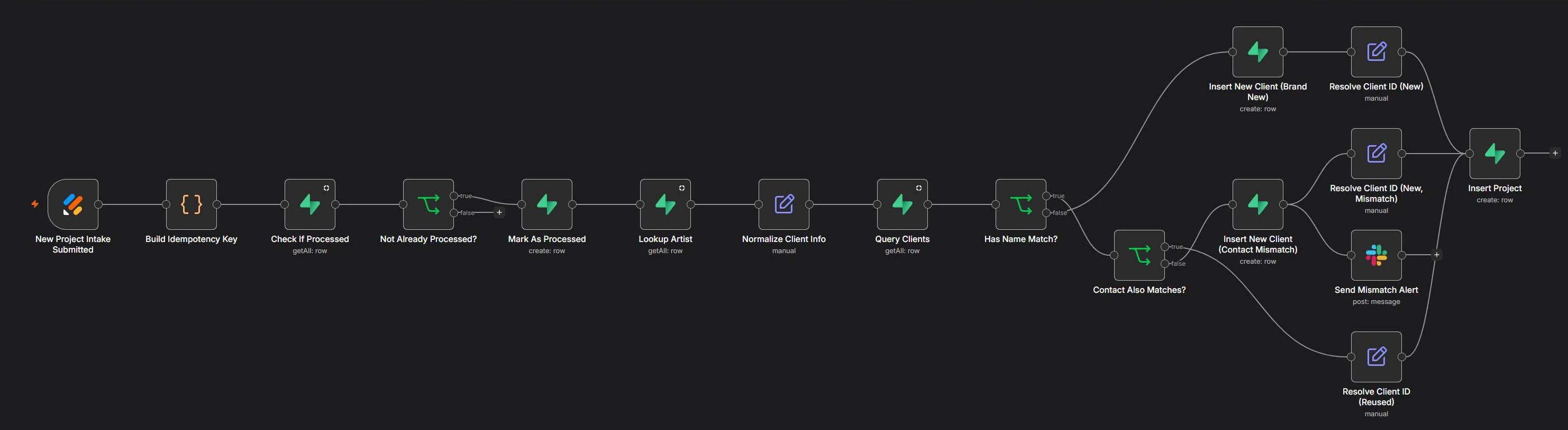
- Duplicate submissions
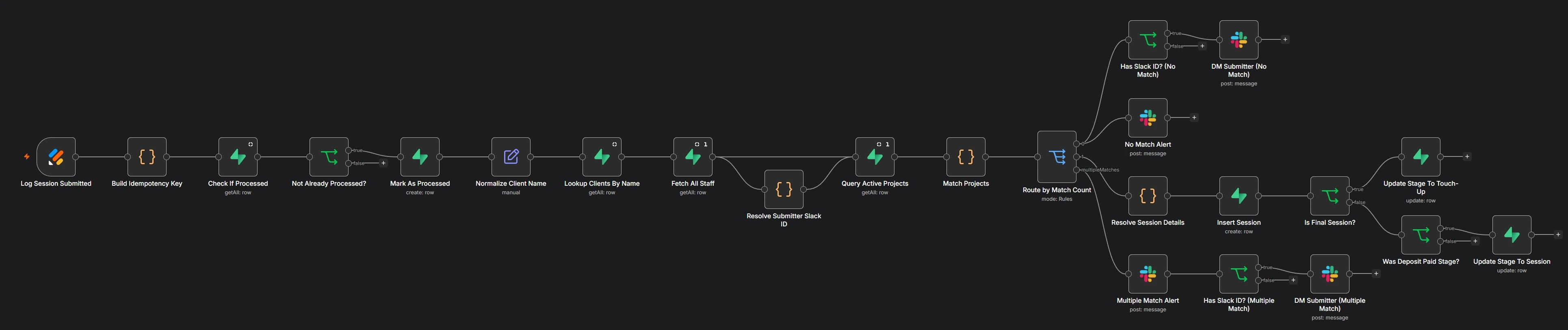
- Which tattoo project a form belongs to
- Each person’s commission rule
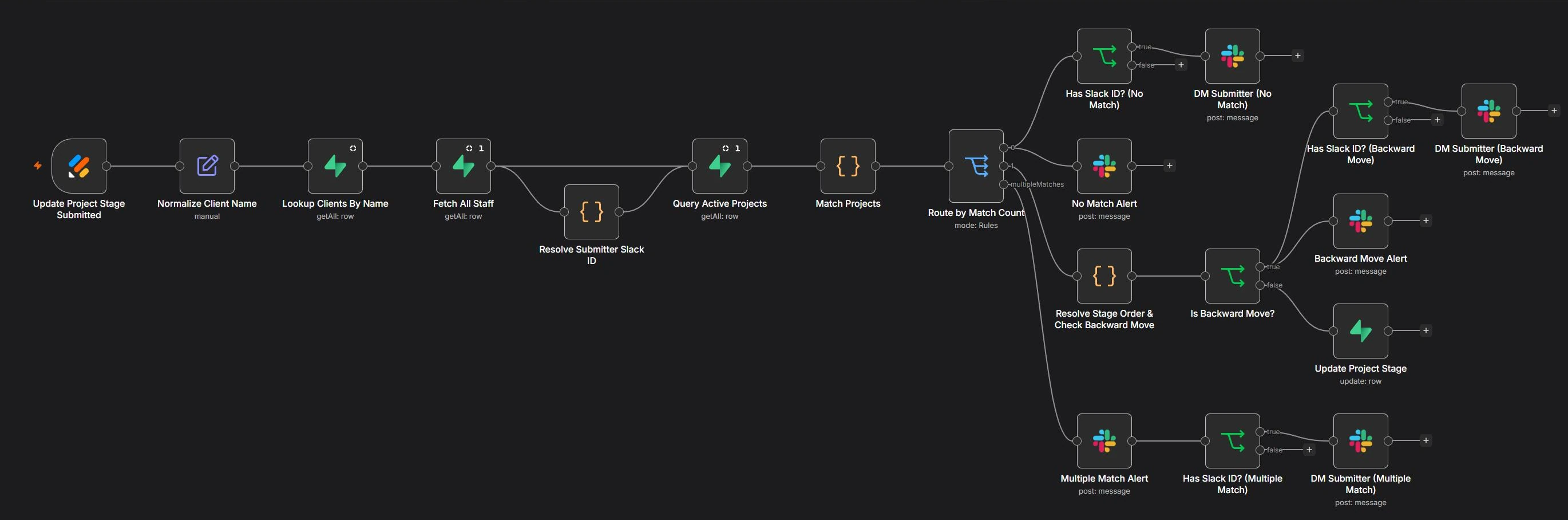
- Projects stuck in one stage
03Kept in Supabase
- Projects and sessions
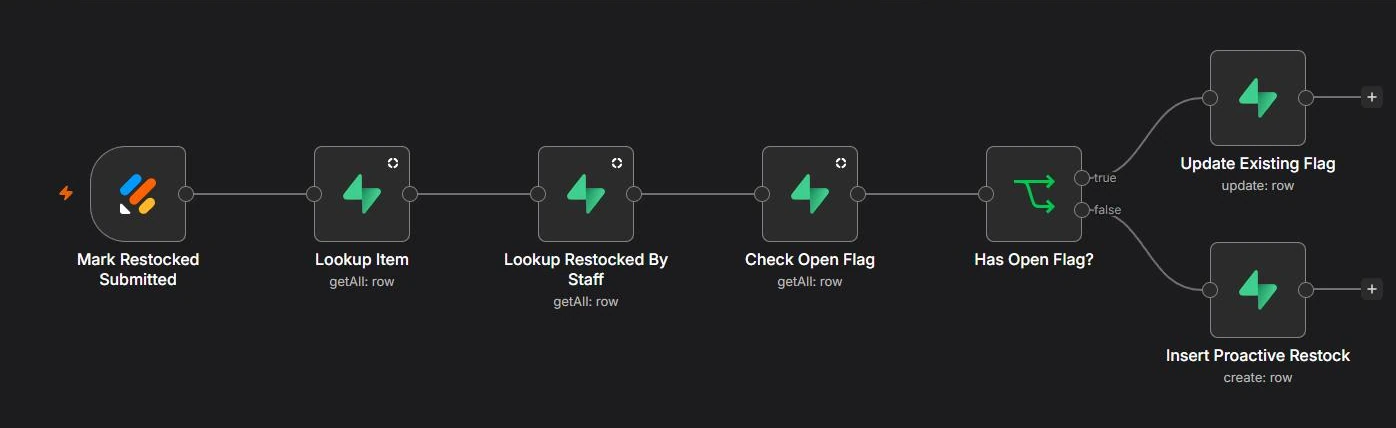
- Inventory flags
- Payout records
04Goes out
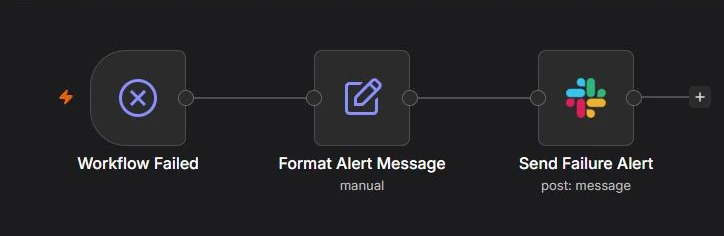
- Slack alerts and reorder flags
- A DM when a form can’t be matched
- Weekly payout summary
- One morning digest
Key decisions
Designed for a part-time studio
Neil’s studio opens four days a week, and he works a full-time job, so each piece had to work with as little attention as possible.
Two-bin inventory instead of exact counts
Staff would stop updating unit counts. Opening the backup bin is a physical trigger an artist can act on without doing math.
Commission rules per person
Each staff member has their own rate and base: one earns on services only, another on services plus retail. The calculator applies each person’s rule instead of stretching one formula over everyone.
A tip-pool workflow, cut before it was built
It was in the first plan, but I dropped it before building anything, so it cost nothing.
Duplicate checks on intake forms
A double-tapped submit on a phone doesn’t create a second record.
Unmatched tattoo forms reach the person
If a session log or stage update can’t be matched to one project, the staff member who sent it gets a Slack DM instead of the problem sitting in a log.
What broke
Problems that only showed up live
Real form submissions didn’t match the test data
Jotform’s date fields arrive as a nested day / month / year object in real webhooks, but not in test data. Date parsing broke across three workflows until I traced it and fixed it once.
Test with live submissions early.
A platform bug that looked like my bug
The Slack trigger for the FAQ bot failed in ways no setting could fix. I confirmed it against n8n’s own issue history and a clean test workflow, documented it as a platform limitation, and routed the bot through a different trigger.
Knowing when to stop troubleshooting is part of the job.
The verdict
What stayed, and what didn’t
Eight automations, 14 workflows. After trying them, the owner kept the ones that handle repetitive, numbers-heavy work and dropped the rest.
A workflow can be technically correct and still not be worth running. Next time I’d sit down with the owner before building the full suite.
Show the other eight kept workflowsHide them




Outcome
Where it stands
Nine of the 14 workflows have been in regular use at the studio since June 2026; weekly payouts run on live Square data.
The project tracker flags tattoo projects that haven’t had an update in a while, so the owner no longer goes through every record to find them.
In testing, duplicate submissions stopped after the duplicate checks were added, and the date bug has stayed fixed.
Next: tighten who can read and change each table in the database.
Time per task, before and after
| Task | Before | After |
|---|---|---|
| Calculating weekly payouts | ~45–60 min a week | ~10–15 min |
| Updating project stages and finding stalled work | ~15–20 min a day | ~5–10 min |
| Checking stock and noting restocks | ~10–15 min a day | ~2–5 min |
| Getting the day’s overview | ~10–15 min a day | ~2–5 min |
Estimates from the studio owner, per opening day (the studio opens four days a week). Not measured with a timer. Overall he puts it at one to two hours saved a week, depending on how busy it is.
The studio’s name is withheld. The operating data came from the studio itself.
Timeline
From demo to real use
Feb 2026 started as a demoMar 2026 a real studio signs onJun 2026 in regular use
Show the full timelineHide the timeline
Feb 2026
A demo for this portfolio
Me
Planned eight automations a tattoo and barber studio could use, around a made-up studio, and started building them.
Mar 2026
A real studio signs on
The studio
Neil, who runs a tattoo and barber studio, agreed to pilot it.
Me
From then on I built for his studio’s needs instead of the demo brief.
Mar – Jun 2026
Built and tested on real work
The studio
Used each workflow in the studio’s real work. What didn’t make sense for how they operated was changed or dropped.
Me
Built and tested every workflow on the studio’s real work. Two problems only showed up live (see What broke).
Jun 2026
In regular use
The studio
Kept nine workflows and dropped five.
Me
Weekly payouts run on live Square data. It’s still live.
Payouts are easier, I get notified when inventory needs attention, and I don’t have to keep everything in my head. If something didn’t make sense for how we operated, we’d change it or just drop it. He was building around how we actually ran the business.
Next project
Zapier CRM Series
Hiring, or have a process to automate?